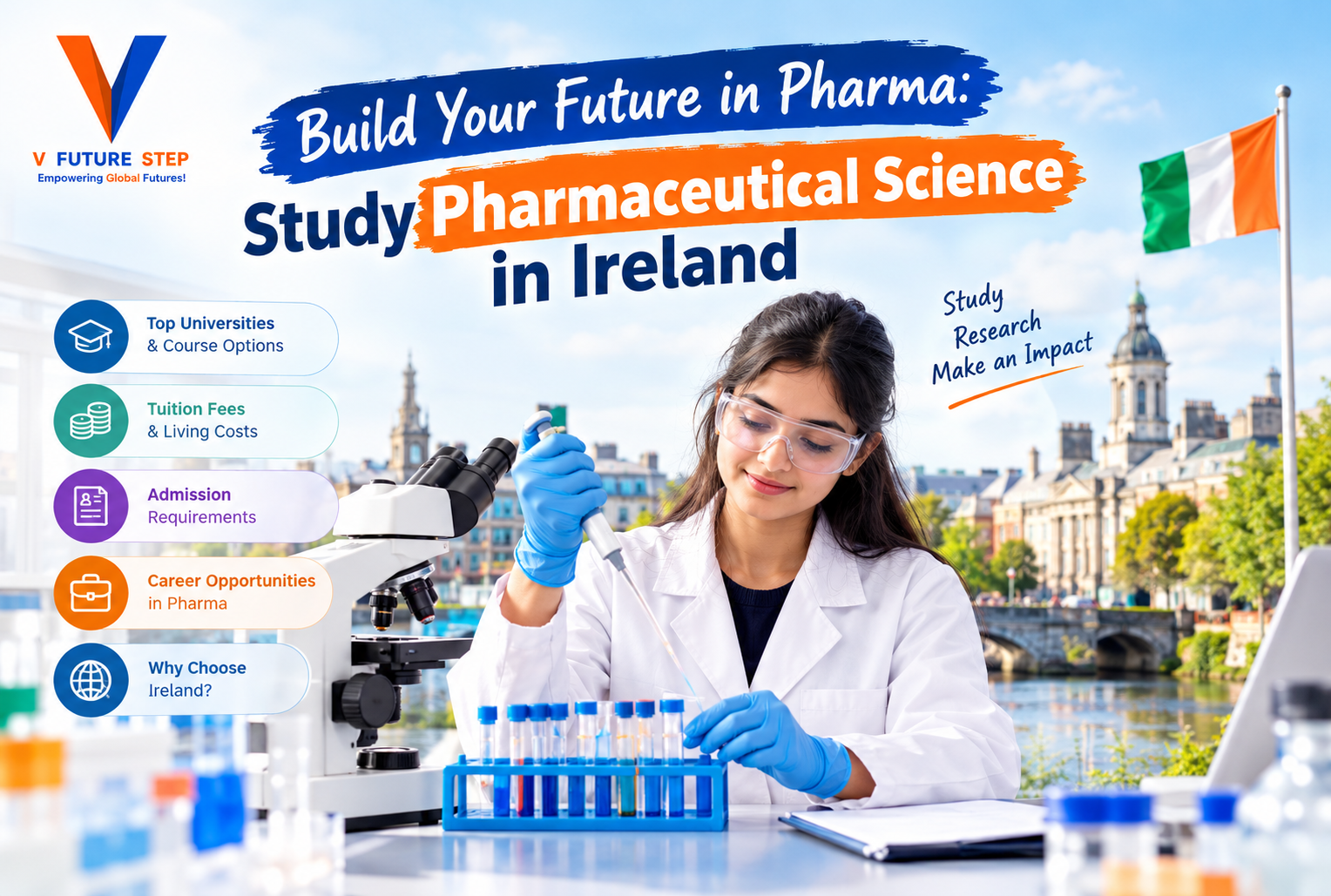
Courses, Universities, and Study Benefits
A career in the pharmaceutical industry can open doors to science, research, and medicine development. If you enjoy biology, chemistry, and laboratory work, this field may be worth exploring. Ireland is an option for students who want an international education and an opportunity to learn about the pharmaceutical sector.
Pharmaceutical Science in Ireland covers the science behind medicines, including how they are developed, tested, made, and checked for quality. Depending on the course, students may also learn about biotechnology, drug safety, and research methods. These skills can help prepare graduates for different roles in the pharmaceutical and life sciences industries.
Ireland is home to universities and colleges that offer science and pharmaceutical-related programmes. In addition, the country has a well-established pharmaceutical and biotechnology sector. However, the best course for you will depend on your education, budget, and career plans.
What Is Pharmaceutical Science?
Pharmaceutical science focuses on the discovery, development, testing, and production of medicines. It helps scientists understand how medicines work and how they can be made safe and reliable.
For example, scientists study the ingredients used in medicines and how those ingredients affect the body. They also test products to check whether they meet the required quality standards. As a result, pharmaceutical science plays an important role in the development of medicines used in healthcare.
During your studies, you may learn about:
- Pharmaceutical chemistry: Understanding the chemicals used in medicines.
- Pharmacology: Learning how medicines affect the body.
- Drug development: Exploring how new medicines are created and tested.
- Quality control: Checking whether medicines meet set standards.
- Biotechnology: Studying how living cells and biological processes can support medicine development.
- Pharmaceutical manufacturing: Learning how medicines are produced on a larger scale.
- Research methods: Collecting information, carrying out experiments, and understanding results.
Course content varies between institutions. Therefore, review each course structure before applying.
Why Choose Pharmaceutical Science in Ireland?
Ireland may appeal to students who want to study science in an international setting. It also offers access to a range of academic and industry-related learning opportunities.
1. Learn in a Strong Life Sciences Environment
Ireland has a significant pharmaceutical and biotechnology sector. Many international companies operate in the country, creating a wider business environment for medicine development and production.
However, studying in Ireland does not guarantee a job with a pharmaceutical company. Your career options will depend on your qualification, skills, experience, and the roles available when you graduate.
2. Gain Practical Knowledge
Pharmaceutical science courses may include laboratory sessions, research projects, presentations, and practical assignments. These activities help students connect classroom learning with real scientific work.
For example, you may learn how to record laboratory results, follow safety procedures, and check samples. In addition, some programmes include a research project that allows students to explore a topic in greater detail.
3. Explore Different Career Areas
A pharmaceutical science qualification can support several career paths. Depending on your course and experience, you may explore research, quality testing, manufacturing, or regulatory work.
Moreover, students who enjoy further study may consider a relevant postgraduate programme. This can help them build deeper knowledge in a chosen area.
4. Experience an International Education
Studying abroad gives students the chance to learn in a different academic and cultural setting. You can meet classmates from different backgrounds, develop independence, and improve your communication skills.
At the same time, moving abroad requires careful planning. You should consider tuition fees, accommodation, transport, and other living costs before choosing a university.
Universities and Course Options
When comparing Pharmaceutical Science in Ireland programmes, check the qualification, course content, duration, and entry requirements. Not every university offers the same course, and some programmes focus more on research while others cover manufacturing or related science subjects.
Technological University Dublin
Technological University Dublin offers pharmaceutical science undergraduate study options. Students should review the official course pages to confirm the current course title, entry requirements, duration, and availability for international applicants.
You can explore course information on the TU Dublin official website.
Trinity College Dublin
Trinity College Dublin offers a postgraduate programme in Pharmaceutical Sciences. Its course covers areas related to drug discovery, development, production, analysis, and pharmaceutical research.
The programme may suit graduates from relevant science backgrounds who want to build further knowledge in pharmaceutical research or manufacturing. Entry requirements and study arrangements can change, so check the latest details before applying.
Read more on the Trinity College Dublin Pharmaceutical Sciences course page.
How to Compare Courses
Before choosing an institution, compare the modules and practical learning opportunities. Also, check whether the course matches your previous education.
Use this checklist:
- Does the course match your academic background?
- Are laboratory sessions or research projects included?
- What qualification will you receive?
- What are the tuition fees for international students?
- Does the course accept applications for your preferred intake?
- Are the English-language requirements suitable for you?
Finally, confirm all details directly with the university. This helps you make a decision based on current information rather than assumptions.
Admission, Costs, Careers, and Application Tips
Entry Requirements for International Students
Before applying, check the entry requirements for your chosen course. These rules can differ between universities and qualification levels.
Undergraduate Admission
Students applying for an undergraduate programme usually need a recognised secondary-school qualification. Science subjects such as chemistry and biology may be important, depending on the course.
You should also check the required grades and English-language standards. If your school qualification is not listed on the university website, contact the admissions team to confirm whether it is accepted.
Postgraduate Admission
For a master’s programme, applicants usually need a relevant bachelor’s degree. For example, a course may accept graduates from chemistry, biotechnology, biochemistry, pharmacy, or another suitable science subject.
Some programmes may have additional academic or experience requirements. Therefore, read the course details carefully before preparing your application.
Documents You May Need
Prepare your documents early to avoid last-minute delays. Although the exact list depends on the institution, international applicants may need:
- Academic certificates and transcripts
- A valid passport
- Proof of English-language ability, if required
- A CV for selected postgraduate programmes
- Academic references, if requested
- A personal statement, where required
- Any additional documents listed by the university
Make sure your name and academic details are consistent across your documents. In addition, submit certified translations if the university asks for them.
Tuition Fees and Living Costs
Your budget is an important part of planning to study in Ireland. Tuition fees vary according to the university, course, and level of study. International students may pay different fees from students in other fee categories.
For this reason, check the latest fee information on your chosen university’s website. Do not rely only on older figures or estimates from other students.
You should also plan for everyday expenses, including:
- Accommodation and household bills
- Food and groceries
- Public transport
- Books and study materials
- Health insurance, where required
- Phone and internet costs
- Personal expenses
Living costs can vary by location and lifestyle. For example, your accommodation choice can make a significant difference to your budget. Sharing suitable accommodation and preparing meals at home may help you manage expenses.
In addition, keep some money aside for unexpected costs. A realistic budget should cover your planned expenses without depending on finding a part-time job immediately after arrival.
Scholarships and Financial Planning
Scholarships may help eligible students reduce the cost of their education. However, funding is not guaranteed, and each award has its own rules.
Start by checking the scholarship pages of your chosen university. Some awards consider academic performance, while others may have specific eligibility conditions or application deadlines.
You can also explore official information through Education in Ireland. Compare the award amount, eligibility rules, required documents, and deadline before applying.
Meanwhile, make a backup financial plan. Calculate your expected tuition fees and living costs, then consider how you will cover any amount that a scholarship does not pay.
Student Visa and Immigration Planning
International students must meet the immigration requirements that apply to their nationality and course. Depending on your circumstances, you may need a study visa and permission to remain in Ireland.
First, confirm that your chosen course meets the relevant requirements. Next, prepare the documents listed in the official guidance. These may include evidence of admission, financial support, a passport, and other supporting documents.
Requirements can change, so check the Irish Immigration Service website before submitting an application.
Some students may be allowed to work part-time under their immigration conditions. However, permission depends on the student’s status and current rules. Therefore, confirm your eligibility before accepting employment, and do not rely on part-time income as your main source of funding.
Career Opportunities After Graduation
A pharmaceutical science qualification may help you explore careers in research, testing, manufacturing, and product quality. The roles available to you will depend on your degree, practical skills, experience, and employer requirements.
Pharmaceutical Scientist
Pharmaceutical scientists help study and develop medicines. Their work may involve testing ingredients, improving formulations, or supporting research projects.
Quality Control Analyst
Quality control analysts test materials and products to check whether they meet required standards. They also record results and report possible issues.
Quality Assurance Associate
Quality assurance professionals help companies follow approved procedures and maintain accurate records. In addition, they support systems designed to maintain product quality.
Research Assistant
Research assistants support scientific projects by collecting data, preparing samples, recording findings, and helping with experiments. Some positions may require further study or specific laboratory skills.
Manufacturing and Regulatory Roles
Other graduates may explore pharmaceutical production or regulatory support. These roles can involve following manufacturing procedures, maintaining records, or helping teams meet relevant rules.
Remember that a degree alone does not guarantee employment. Build your skills through laboratory work, projects, placements where available, and relevant experience.
Pharmaceutical Science vs Pharmacy
Although the subjects are related, pharmaceutical science and pharmacy are not the same.
Pharmaceutical science focuses on how medicines are discovered, developed, tested, and produced. Pharmacy focuses more on the safe and effective use of medicines and may lead to regulated professional practice.
Therefore, check the qualification and its career outcomes before applying. If you want to become a registered pharmacist, confirm the specific education and registration requirements for that profession. A pharmaceutical science degree does not automatically qualify you to practise as a pharmacist.
How to Prepare a Strong Application
A clear plan can make the application process easier. Follow these steps:
- Choose your study level. Decide whether you need an undergraduate or postgraduate course.
- Compare programmes. Review course modules, duration, practical learning, and entry requirements.
- Check the budget. Include tuition fees, living costs, insurance, and travel.
- Prepare documents. Gather academic records and other required materials.
- Check deadlines. Apply early enough to meet the university’s requirements.
- Review visa guidance. Use official immigration information to understand the process.
- Keep copies. Save your applications, offers, receipts, and supporting documents.
For additional guidance, add an internal link here to your V Future Step article about [choosing the right study-abroad course] and another to your guide on [planning a study-abroad budget]. Replace these example titles with the actual links to your published articles.
Is Pharmaceutical Science in Ireland Right for You?
If you enjoy science, careful testing, and learning how medicines are made, this field may suit your interests. It can offer a foundation for exploring pharmaceutical research, quality testing, manufacturing, and related areas.
However, choosing the right course requires more than looking at a university name. Consider your academic background, budget, preferred subjects, and long-term goals. Also, check the latest course and immigration requirements before making a final decision.
Pharmaceutical Science in Ireland may be a useful option for students who want to develop scientific knowledge in an international learning environment. With careful research and realistic planning, you can choose a programme that fits your needs.
Frequently Asked Questions About Pharmaceutical Science in Ireland
Is Ireland a good destination for pharmaceutical science students?
Ireland can be a good option for students interested in medicine development, laboratory research, and pharmaceutical manufacturing. However, compare course content, university facilities, fees, and entry requirements before applying.
What qualifications are required for pharmaceutical science courses?
Undergraduate courses generally require a recognised secondary-school qualification. For postgraduate programmes, universities usually expect a relevant bachelor’s degree. Requirements vary by institution.
What jobs can I pursue after graduation?
Depending on your qualification and experience, you may explore jobs in quality control, quality assurance, pharmaceutical research, manufacturing, and laboratory support.
How much does it cost to study pharmaceutical science in Ireland?
The total cost depends on tuition fees, accommodation, food, transport, and personal expenses. Therefore, check the latest university fees and prepare a realistic budget before applying.
Can international students work while studying?
Some international students may work part-time if their immigration permission allows it. Always check the latest official rules before accepting employment.
Final Thoughts
Choosing the right course is an important step towards your future career. Pharmaceutical Science in Ireland may suit students who enjoy science, laboratory work, and learning how medicines are developed and tested.
Before applying, compare universities, course modules, tuition fees, and admission requirements. In addition, check the latest immigration rules and plan your finances carefully. With proper preparation, you can choose a programme that matches your interests and long-term goals.
V Future Step helps students explore and compare study-abroad options and connects them with suitable agencies for guidance based on their academic profile and future goals.