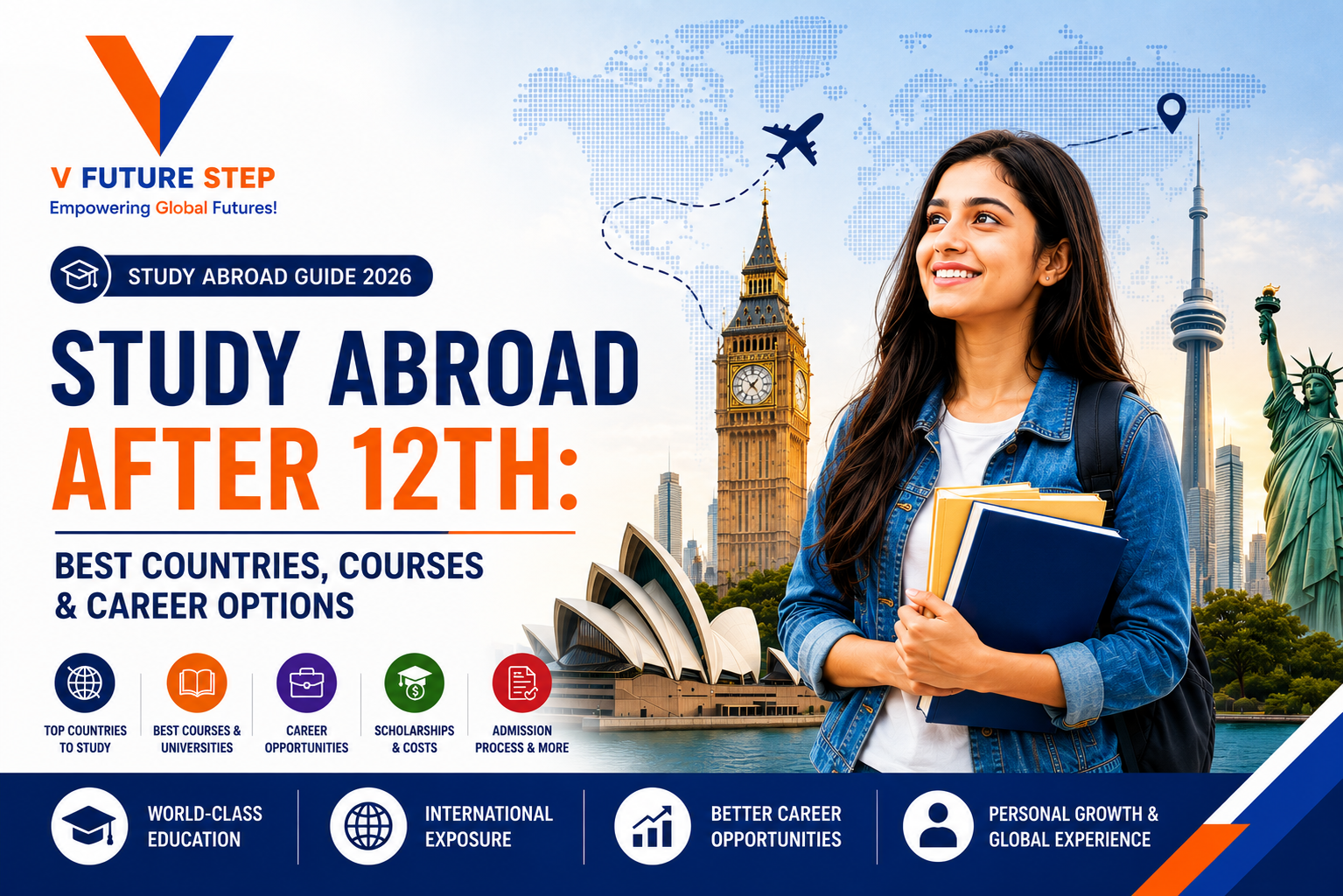
Completing Class 12 is one of the biggest milestones in a student’s life. While many students continue their higher education in India, an increasing number are choosing to study abroad after 12th to gain international exposure, access world-class education, and build successful global careers.
Studying overseas is no longer just about earning an international degree. It provides students with opportunities to experience different cultures, develop independent thinking, improve communication skills, and enhance employability in an increasingly competitive job market.
With countries introducing flexible visa policies, scholarships, post-study work permits, and attractive career pathways, 2027 is expected to be an excellent year for Indian students planning their international education journey.
If you’re wondering whether studying abroad after Class 12 is the right decision, this guide covers everything you need to know—from choosing the right country and course to understanding career opportunities after graduation.
Why Study Abroad After 12th?
Many students believe they should complete their bachelor’s degree in India before considering overseas education. However, beginning your undergraduate studies abroad offers several long-term advantages.
Some of the biggest benefits include:
- Internationally recognised qualifications
- Practical learning approaches
- Better research facilities
- Global career opportunities
- Exposure to diverse cultures
- Strong communication and leadership development
- Access to post-study work opportunities
Students who begin their education abroad often adapt more easily to international work environments and build professional networks from an early stage.
How to Choose the Right Country
Choosing the right destination is one of the most important decisions in your study abroad journey. Every country offers different advantages based on education quality, tuition fees, living expenses, work opportunities, and immigration policies.
Before making your decision, consider the following factors:
- Budget
- Preferred course
- Language requirements
- Career goals
- Post-study work opportunities
- Quality of universities
- Safety and student support
The right destination is not necessarily the most popular one—it is the country that aligns best with your academic and professional aspirations.
Best Countries to Study Abroad After 12th
1. Canada
Canada continues to be one of the top choices for Indian students because of its excellent education system, multicultural environment, and strong employment opportunities.
Why Choose Canada?
- Globally recognised universities
- High-quality education
- Excellent student support
- Work opportunities during studies
- Attractive post-study work options
- Friendly immigration policies
Popular Courses
- Computer Science
- Business Administration
- Engineering
- Healthcare
- Hospitality Management
- Artificial Intelligence
Canada remains an excellent destination for students looking for long-term career growth after graduation.
2. Australia
Australia has consistently ranked among the world’s most popular destinations for international students.
Its universities focus heavily on practical learning, industry collaboration, and employability.
Advantages
- High academic standards
- Excellent quality of life
- Part-time work opportunities
- Strong graduate employment rates
- Multicultural student community
Popular Courses
- Nursing
- Engineering
- Information Technology
- Business
- Data Science
- Tourism Management
Australia also offers attractive post-study work opportunities, making it appealing for students planning international careers.
3. United Kingdom
The UK is home to some of the world’s oldest and most prestigious universities.
Students benefit from shorter degree durations, globally recognised qualifications, and excellent career prospects.
Why Students Prefer the UK
- Three-year undergraduate degrees
- Strong academic reputation
- International student community
- Access to internships
- Graduate work opportunities
Popular Courses
- Law
- Finance
- Marketing
- Psychology
- Computer Science
- Architecture
For students seeking quality education abroad with shorter completion times, the UK remains an excellent option.
4. Germany
Germany has become increasingly popular because of its affordable education and strong engineering programs.
Many public universities charge very low tuition fees, making Germany attractive for students seeking high-quality education at lower costs.
Popular Courses
- Mechanical Engineering
- Automotive Engineering
- Computer Science
- Artificial Intelligence
- Robotics
- Renewable Energy
Germany is particularly suitable for students interested in technical and engineering careers.
5. Ireland
Ireland has emerged as a preferred destination due to its rapidly growing technology sector and globally recognised universities.
Students studying in Ireland benefit from strong industry connections and career opportunities after graduation.
Popular Courses
- Data Analytics
- Cybersecurity
- Business
- Pharmaceutical Sciences
- Software Engineering
- Finance
Ireland continues to attract students looking for careers in technology and innovation.
Best Courses to Study Abroad After 12th
Selecting the right course is just as important as choosing the destination.
Instead of following trends, students should choose programs based on their interests, strengths, and long-term career goals.
Some of the most in-demand undergraduate courses include:
Computer Science
Technology continues to shape every industry.
Computer Science graduates enjoy excellent career opportunities in software development, cloud computing, artificial intelligence, and data analytics.
Artificial Intelligence
Artificial Intelligence has become one of the fastest-growing fields globally.
Students learn machine learning, robotics, automation, and intelligent systems, preparing them for high-paying careers in future technologies.
Data Science
Businesses today depend heavily on data for decision-making.
Data Science combines mathematics, programming, and business intelligence, making it one of the most valuable qualifications for future professionals.
Cybersecurity
As digital transformation accelerates, protecting sensitive information has become a global priority.
Cybersecurity professionals are among the most sought-after technology specialists worldwide.
Business Management
Business degrees remain one of the most versatile choices for international students.
Graduates can build careers in finance, marketing, consulting, entrepreneurship, human resources, and international business.
Engineering
Engineering continues to offer excellent employment opportunities across multiple industries.
Popular specialisations include:
- Civil Engineering
- Mechanical Engineering
- Electrical Engineering
- Aerospace Engineering
- Software Engineering
- Mechatronics
Engineering graduates remain highly valued across international job markets.
Healthcare and Nursing
Healthcare professionals continue to experience strong global demand.
Countries including Australia, Canada, Ireland, and the UK regularly recruit qualified healthcare graduates.
Popular programs include:
- Nursing
- Physiotherapy
- Public Health
- Biomedical Science
- Healthcare Management
Hospitality and Tourism
Students interested in customer service, travel, and event management can build exciting international careers through hospitality programs.
Major employers actively recruit graduates with international education and practical training.
Career Opportunities After Studying Abroad
One of the biggest reasons students choose international education is the wide range of career opportunities available after graduation.
Graduates from leading universities often find employment across industries such as technology, healthcare, finance, engineering, consulting, hospitality, and research.
International education also develops valuable soft skills including communication, leadership, adaptability, teamwork, and problem-solving.
These skills significantly improve employability in today’s competitive global job market.
Admission Requirements for Studying Abroad After 12th
Although admission criteria vary from one university to another, most institutions require students to submit a standard set of documents.
Common Admission Requirements
- Class 10 and 12 academic transcripts
- Valid passport
- English language proficiency test scores (if applicable)
- Statement of Purpose (SOP)
- Letters of Recommendation (for selected universities)
- Resume (for certain programs)
- Portfolio (for design and creative courses)
Many universities also offer pathway or foundation programs for students who need additional academic preparation before beginning their undergraduate degree.
Scholarships for Indian Students
One of the biggest misconceptions about studying abroad is that it is affordable only for wealthy families. In reality, thousands of scholarships are available every year for deserving international students.
Scholarships may be awarded based on:
- Academic excellence
- Leadership qualities
- Sports achievements
- Community involvement
- Financial need
- University merit
Applying early and maintaining a strong academic profile significantly improves your chances of receiving financial assistance.
Apart from scholarships, students can also explore education loans, tuition fee discounts, and university bursaries to reduce the overall cost of studying abroad.
Cost of Studying Abroad After 12th
The total cost depends on the country, university, course, accommodation, and lifestyle. Instead of looking only at tuition fees, students should calculate the complete annual budget.
Major Expenses Include
- Tuition fees
- Accommodation
- Food
- Health insurance
- Transportation
- Study materials
- Personal expenses
Countries such as Germany and Malaysia are generally more affordable, while destinations like the United States, Australia, and the United Kingdom may require a higher budget. However, part-time work opportunities and scholarships can help students manage their expenses effectively.
Can Students Work While Studying?
Yes. Most popular study destinations allow international students to work part-time while completing their education, subject to visa regulations.
Working part-time provides several benefits:
- Extra financial support
- International work experience
- Improved communication skills
- Better understanding of workplace culture
- Professional networking opportunities
Many students use part-time earnings to cover transportation, groceries, and daily living expenses while gaining valuable practical experience.
Step-by-Step Timeline for Studying Abroad After 12th
Planning early can make your application process smoother and reduce unnecessary stress.
12–18 Months Before Intake
- Research countries and universities
- Shortlist courses
- Prepare for English language tests if required
- Explore scholarship opportunities
8–12 Months Before Intake
- Submit university applications
- Prepare required documents
- Write your Statement of Purpose
- Apply for scholarships
4–6 Months Before Intake
- Receive admission offers
- Accept your preferred university
- Arrange finances
- Begin your student visa application
2–3 Months Before Departure
- Book accommodation
- Arrange travel insurance
- Attend pre-departure sessions
- Book flight tickets
- Prepare essential documents
Following a structured timeline reduces last-minute complications and improves the overall application experience.
Common Mistakes Students Should Avoid
Many students make avoidable mistakes that delay their admission process or affect their visa applications.
Some of the most common mistakes include:
Choosing a Country Based Only on Popularity
The most popular destination may not always be the best fit for your career goals or budget.
Ignoring Career Opportunities
Students should evaluate graduate employment prospects rather than selecting courses based solely on current trends.
Missing Application Deadlines
Late applications can reduce scholarship opportunities and limit university choices.
Weak Statement of Purpose
A generic SOP often fails to explain your motivation and future goals effectively.
Poor Financial Planning
Understanding the total cost of education helps avoid financial stress after arriving abroad.
Not Seeking Professional Guidance
Expert guidance can simplify university selection, applications, visa documentation, and scholarship planning.
How to Choose the Right Course
The right course is one that combines your interests, abilities, and future career aspirations.
Ask yourself these questions:
- What subjects do I genuinely enjoy?
- Which careers are expected to grow over the next decade?
- What salary expectations do I have?
- Do I enjoy practical work, research, creativity, or business?
- Which countries offer the strongest opportunities in my chosen field?
Instead of following friends or social media trends, make decisions based on long-term career growth.
Why More Students Are Choosing International Education in 2027
Global education has evolved significantly over the past few years. Universities are introducing industry-focused programs, flexible learning methods, internships, and stronger employer partnerships.
Students are no longer looking only for degrees—they are looking for experiences that improve their employability and prepare them for global careers.
From technology and healthcare to business and engineering, studying abroad after 12th opens doors to opportunities that extend far beyond the classroom.
Final Thoughts
Choosing to study abroad after 12th is one of the most important decisions a student can make. It is an investment not only in education but also in personal growth, professional development, and future career success.
Whether you dream of becoming an engineer in Germany, a business leader in Canada, a healthcare professional in Australia, or a technology expert in Ireland, the right destination and course can shape your future in remarkable ways.
The key is to start planning early, research thoroughly, prepare strong applications, and seek expert guidance whenever needed. With the right strategy and determination, your dream of studying abroad can become a reality.
Start Your Global Education Journey with V Future Step
At V Future Step – Empowering Global Futures!, we help students explore, compare, and choose the right opportunities abroad with confidence.
Our expert guidance includes:
✅ University & course selection
✅ Country comparison and career counselling
✅ Scholarship assistance
✅ SOP & application support
✅ Student visa guidance
✅ Pre-departure assistance
Whether you’re planning to study in Canada, the UK, Australia, Ireland, Germany, or another leading destination, our team is here to support you every step of the way.
Your future starts with the right decision today. Let V Future Step help you take the first step toward a successful global career.
Frequently Asked Questions (FAQs)
Is it a good idea to study abroad after 12th?
Yes. Studying abroad after 12th gives students access to world-class education, international exposure, better career opportunities, and globally recognised qualifications.
Which country is best for Indian students after 12th?
Canada, Australia, the United Kingdom, Germany, Ireland, and New Zealand are among the most popular choices due to their education quality, work opportunities, and student-friendly policies.
Which courses are most in demand abroad?
Computer Science, Artificial Intelligence, Data Science, Cybersecurity, Engineering, Business Management, Healthcare, and Nursing are among the fastest-growing fields.
Can I work while studying abroad?
Most countries allow international students to work part-time during their studies and full-time during scheduled academic breaks, subject to visa regulations.
How early should I start planning?
Ideally, students should begin planning 12–18 months before their intended intake to allow enough time for university applications, scholarships, financial planning, and visa processing.