Ireland has become an increasingly popular study abroad destination for international students looking for high-quality education, a welcoming environment and strong connections with global industries. The country combines internationally recognized universities and colleges with a growing technology, pharmaceutical, financial services, healthcare and life sciences ecosystem.
For Indian students, study in Ireland can provide an opportunity to gain an internationally recognized qualification, develop industry-relevant skills and experience life in an English-speaking European country. Popular areas include Pharmaceutical Sciences, Biotechnology, FinTech, Accounting, Cybersecurity, Food Science, Renewable Energy, Healthcare, Digital Marketing and Hospitality.
Ireland also offers students the opportunity to experience European culture while studying in a relatively compact country with strong connections to international businesses and industries.
Irish universities, institutes of technology and other higher education institutions offer internationally recognized qualifications across a wide range of academic fields.
Ireland has a strong presence of international companies, particularly across technology, pharmaceuticals, financial services, healthcare and life sciences, creating opportunities for industry exposure and professional networking.
Students can complete their higher education in an English-speaking academic environment while gaining international exposure.
Many programs combine academic knowledge with practical projects, research, placements or industry-related learning depending on the course.
Studying in Ireland gives students the opportunity to experience European culture, travel and build an international network while pursuing their education.
Ireland is known for its friendly communities and international student population, making it an attractive destination for students moving abroad for the first time.
Ireland offers opportunities in research-intensive areas such as pharmaceuticals, biotechnology, healthcare, technology, engineering and environmental sciences.
Ireland offers different academic pathways depending on your previous qualification and future plans.
Undergraduate programs provide students with academic knowledge and practical skills in their chosen field.
Ireland offers a wide selection of postgraduate programs, including many intensive one-year Master's courses.
Students can explore specialized programs designed to build professional and academic skills in a particular area.
Foundation pathways can help eligible international students prepare for higher education when additional academic preparation is required.
Research-focused students can explore PhD and doctoral opportunities across science, technology, healthcare, business, humanities and other disciplines.
The right study level depends on your previous qualification, academic background, career goals and chosen institution.
Ireland has a strong reputation in the pharmaceutical and life sciences sector, making these fields particularly attractive.
Popular areas include:
These programs can lead to opportunities across pharmaceutical companies, biotechnology, research, quality assurance and laboratory-based industries.
Students interested in the intersection of finance and technology can explore:
These fields can lead to career opportunities across banking, financial services, technology companies and digital finance.
Popular areas include:
Ireland's international business environment provides opportunities for students interested in accounting, finance and professional services.
Students interested in protecting digital systems and information can explore:
Career pathways can include cybersecurity, information security, risk management, digital forensics and technology services.
Ireland offers interesting study options for students interested in the science and technology behind food production.
Popular areas include:
These programs can lead to opportunities across food production, quality assurance, research, nutrition and food technology.
Students interested in environmental challenges and the future of energy can explore:
These fields can support careers across renewable energy, sustainability, environmental consulting and energy management.
Students interested in modern marketing and digital communication can explore:
Career opportunities can include digital marketing, brand management, content, communications and customer engagement.
Ireland's tourism and hospitality sector offers study opportunities in:
These programs can lead to careers across hotels, tourism, events, restaurants and international hospitality businesses.
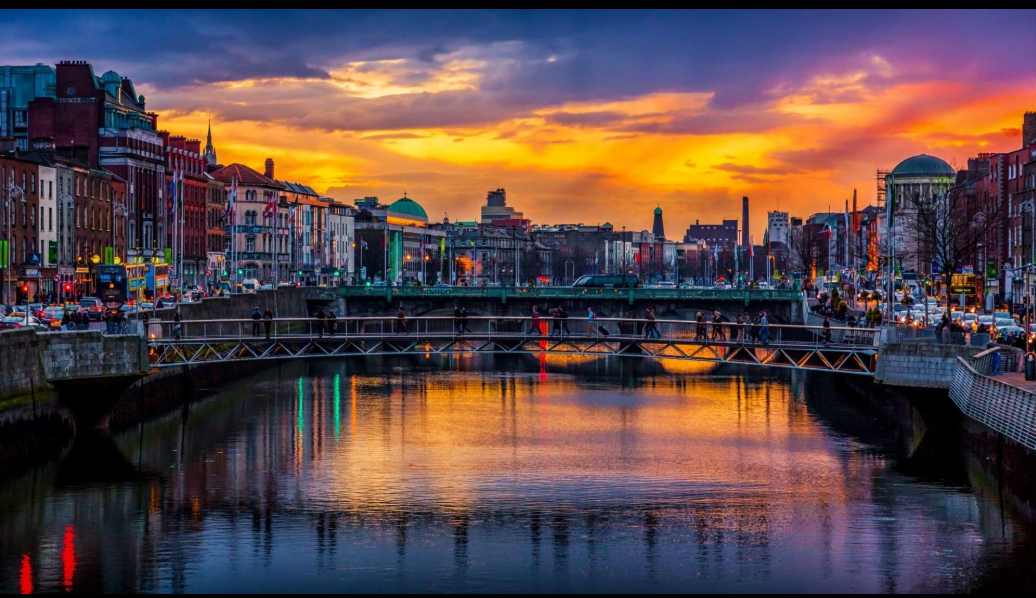
Ireland's capital and the country's largest student destination, with strong connections to Technology, Finance, Pharmaceuticals, Business, Media and Professional Services.
A popular student city with strong links to Pharmaceuticals, Technology, Healthcare, Food, Business and Life Sciences.
Known for its vibrant student environment and opportunities connected with Medical Technology, Healthcare, Technology, Arts and Business.
A growing education and business destination with opportunities across Engineering, Technology, Business, Healthcare and Life Sciences.
Known for education, Technology, Business, Pharmaceutical-related industries and a growing innovation ecosystem.
A popular university town located close to Dublin, offering a strong academic environment and access to the wider Dublin region.
Planning your finances is an important part of your Ireland study abroad journey.
|
Study Level |
Indicative Annual Tuition |
|
Bachelor's Degree |
€10,000–30,000+ |
|
Master's Degree |
€12,000–35,000+ |
|
Higher Diploma / Graduate Programs |
€12,000–25,000+ |
|
Doctoral Programs |
€12,000–30,000+ |
Tuition varies by institution, program and specialization. Medicine and some healthcare programs can have significantly higher tuition fees.
Current published fee ranges show considerable variation by field, with areas such as Business, Engineering, Science & Technology, Arts and Humanities and Medicine having different fee levels.
Students should also plan for:
|
Expense |
What to Include |
|
Accommodation |
Student residence, shared housing or private accommodation |
|
Food |
Groceries and meals |
|
Transportation |
Public transport and local travel |
|
Health Insurance |
Private health insurance and healthcare expenses |
|
Study Expenses |
Books, supplies and academic materials |
|
Personal Expenses |
Phone, internet and everyday spending |
|
Travel |
Flights and travel within Ireland and Europe |
|
Other Expenses |
Personal and unexpected costs |
International students can generally expect to spend around €1,000–1,500 per month on living expenses, depending on the city, accommodation and lifestyle.
This means students can plan for approximately €12,000–18,000 per year for living expenses in addition to tuition.
Dublin can have higher accommodation costs, while cities such as Cork, Galway, Limerick and Waterford can offer different cost levels depending on accommodation and lifestyle. Recent student budgeting information from Limerick, for example, puts a realistic student budget at around €1,000–1,200 per month including rent, food and transport.
Private health insurance is also an important part of the budget for non-EU/EEA students.
Your overall Ireland education budget should include:
Tuition + Accommodation + Living Expenses + Health Insurance + Transportation + Study Expenses
International students can explore different types of financial support.
Awards may be available to students with strong academic performance and achievements.
Irish universities and institutions may offer scholarships, fee reductions or other financial support to eligible international students.
Certain departments or programs may offer financial support based on academic performance, field of study or other criteria.
Students can also explore scholarships offered by governments, organizations, foundations and other institutions.
Scholarship availability, eligibility and deadlines vary between institutions and programs.
International students from outside the EU/EEA who require permission to study in Ireland generally need to complete the appropriate student visa and immigration process.
The process can involve:
For longer-term study, students generally receive student immigration permission such as Stamp 2 when they meet the applicable requirements.
One of the attractive aspects of study in Ireland is the opportunity for eligible international students to earn while studying.
Students holding valid Stamp 2 permission can generally work up to 20 hours per week during term time and up to 40 hours per week during specified holiday periods, subject to the applicable conditions.
Student and entry-level jobs can commonly provide earnings around:
Actual earnings depend on the job, employer, location, experience and applicable wage requirements.
A student earning €14 per hour and working 20 hours per week could earn approximately:
€280 per week
or around:
€1,120 per month
before applicable deductions.
Students may explore suitable opportunities in areas such as:
Working while studying can provide additional income along with valuable workplace experience and professional skills.
Students must demonstrate sufficient financial support for their stay and should not plan their primary study funding around future part-time employment.
Ireland offers career opportunities across Pharmaceuticals, Technology, Finance, Healthcare, Food, Engineering, Renewable Energy and other industries.
|
Study Area |
Career Opportunities |
Key Skills |
|
💊 Pharmaceutical Sciences |
Pharmaceutical Professional, Quality Specialist, Research Professional |
Science, Research, Quality |
|
🧬 Biotechnology |
Biotechnology Professional, Laboratory Specialist, Researcher |
Laboratory, Science, Research |
|
💳 FinTech |
FinTech Professional, Financial Analyst, Digital Finance Professional |
Finance, Technology, Analytics |
|
📊 Accounting & Finance |
Accountant, Financial Analyst, Audit Professional |
Accounting, Finance, Analysis |
|
🔐 Cybersecurity |
Cybersecurity Analyst, Information Security Professional, Risk Specialist |
Security, Technology, Risk |
|
🥛 Food Science |
Food Technologist, Quality Professional, Food Safety Specialist |
Science, Quality, Food Technology |
|
🌱 Renewable Energy |
Energy Professional, Sustainability Specialist, Environmental Professional |
Sustainability, Energy, Analysis |
|
📱 Digital Marketing |
Digital Marketing Professional, Brand Specialist, Communications Professional |
Marketing, Content, Analytics |
|
🏨 Hospitality |
Hotel Professional, Tourism Specialist, Event Professional |
Hospitality, Management, Customer Service |
Career opportunities depend on your qualification, skills, experience, location and the requirements of your chosen profession.
Ireland provides eligible international graduates with a pathway to remain in the country after completing qualifying higher education through the Third Level Graduate Programme.
Eligible Level 8 graduates can generally receive up to 12 months of graduate permission, while eligible Level 9 or higher graduates can receive up to 24 months, subject to the applicable requirements.
During the graduate permission period, eligible graduates can work full-time and explore graduate-level employment opportunities.
Graduates can explore career opportunities across:
Students interested in building a longer-term career in Ireland can explore applicable employment-permit pathways based on their profession, employer and circumstances.
An Irish qualification can support career development across a wide range of industries.
Pharmaceuticals • Biotechnology • Medical Devices • Research • Quality Assurance
Cybersecurity • Software • Cloud • Digital Services • Information Security
Banking • Financial Services • Accounting • FinTech • Risk Management
Renewable Energy • Environmental Management • Sustainability • Energy Technology
Food Science • Food Technology • Quality • Nutrition • Food Innovation
Digital Marketing • Brand Management • Media • Communications • Advertising
Hotels • Tourism • Events • Hospitality Management • Travel
Your journey to study in Ireland can be viewed as a series of important stages:
|
Stage |
Your Next Move |
What It Involves |
|
01 |
Define Your Goal |
Choose your preferred field, career direction and study level |
|
02 |
Select Your Course |
Explore Ireland programs that match your academic background and future plans |
|
03 |
Shortlist Institutions |
Compare universities, colleges, programs, locations and costs |
|
04 |
Check Eligibility |
Review academic, English-language and program-specific requirements |
|
05 |
Prepare Documents |
Arrange transcripts, test scores, statements and other required documents |
|
06 |
Apply & Receive Admission |
Submit applications and review your admission offer |
|
07 |
Arrange Finances |
Plan tuition, living expenses and financial documentation |
|
08 |
Apply for Student Visa |
Complete the applicable Ireland student visa process |
|
09 |
Prepare to Travel |
Arrange accommodation, insurance, travel and other essentials |
|
10 |
Start Your Irish Journey |
Begin your studies and experience life in Ireland |
Studying in Ireland is more than attending classes.
Irish universities and colleges offer student clubs, societies, sports, cultural activities and academic events.
Meet students from different countries and develop an international network.
Build professional connections through internships, projects, research, placements and career events where available.
Students can experience Ireland's historic towns, coastal landscapes, cultural attractions and vibrant cities while also enjoying opportunities to explore other European destinations.
Living and studying abroad can help students develop confidence, adaptability, communication and decision-making skills.
Ireland continues to attract Indian students looking for internationally recognized qualifications, English-language education and opportunities to build international careers.
Indian students commonly explore:
✔ English-speaking education
✔ Globally recognized qualifications
✔ Strong pharmaceutical and technology industries
✔ Growing opportunities in FinTech and financial services
✔ Research and innovation opportunities
✔ Multicultural environment
✔ European exposure
✔ Post-study work opportunities for eligible graduates
The best Ireland program is one that fits your academic background, career goals, preferred location and budget.
When comparing Irish universities and colleges, look beyond rankings.
Look at the curriculum, specialization, modules, practical learning and career relevance.
Consider academic quality, facilities, research opportunities, student support and university environment.
Consider accommodation, lifestyle, transportation and career opportunities.
Look at tuition, accommodation, living expenses, health insurance and other costs together.
Explore internships, placements, research opportunities and industry partnerships where available.
Understand the applicable graduate and employment pathways connected with your chosen program.
Choose an institution and course that supports the career you want to build.
Choosing the right Ireland education consultant can make your study abroad journey easier to understand and manage.
A study abroad consultant for Ireland can assist with:
✔ Course selection
✔ University and college shortlisting
✔ Application preparation
✔ Scholarship opportunities
✔ Financial planning
✔ Ireland student visa guidance
✔ Pre-departure preparation
V Future Step helps students explore and compare suitable Ireland education consultants based on their course, study level, destination preferences and support requirements.
Ireland can offer much more than a degree.
It can give you the opportunity to study in an English-speaking European country, develop specialized skills, gain international exposure, connect with global industries and prepare for an international career.
Whether you are planning a Bachelor's, Master's, Higher Diploma or research program, the right Ireland education pathway can become an important step towards your academic and professional goals.
V Future Step helps students explore study in Ireland options, compare programs and institutions, understand the application journey and connect with suitable study abroad consultants for Ireland.
Explore Ireland. Choose your path. Build your future.
Ireland offers internationally recognized education, English-language programs, strong industry connections and opportunities across technology, pharmaceuticals, finance, healthcare, engineering and other sectors. The right choice depends on your academic profile, career goals, budget and preferred course.
Popular choices include Pharmaceutical Sciences, Biotechnology, FinTech, Accounting & Finance, Cybersecurity, Food Science, Renewable Energy, Digital Marketing, Healthcare and Hospitality.
Tuition varies by institution and program. As a general planning guide, Bachelor's programs can range around €10,000–30,000+ per year, while Master's programs can range around €12,000–35,000+. Specialized programs such as Medicine can have significantly higher fees.
International students can generally plan around €1,000–1,500 per month for living expenses, depending on the city, accommodation and lifestyle.
Yes. Eligible international students holding Stamp 2 permission can generally work up to 20 hours per week during term time and up to 40 hours during specified holiday periods.
Student and entry-level jobs can commonly provide around €13–15+ per hour, depending on the job, employer, location and applicable wage requirements.
Eligible graduates may be able to remain in Ireland through the Third Level Graduate Programme and gain professional experience after completing a qualifying Irish qualification.
It is a graduate immigration pathway that allows eligible international graduates to remain in Ireland after completing qualifying higher education and seek graduate-level employment. Level 8 graduates can generally receive up to 12 months, while eligible Level 9 or higher graduates can receive up to 24 months, subject to the applicable requirements.
English-language requirements vary by institution and program. Irish universities and colleges set their own English-language entry requirements and may accept IELTS or other recognized tests.
Yes. Students who have completed Grade 12 can explore Bachelor's degrees and other undergraduate pathways depending on their academic profile and the institution's entry requirements.
Private health insurance is required for non-EU/EEA students studying in Ireland and forms part of the immigration and student-registration process.
Many Irish Master's programs can be completed in one year, although the duration varies depending on the course and institution.
Starting around 8–12 months before your preferred intake gives you time to research institutions, prepare English-language tests where required, arrange documents, apply for admission, plan finances and prepare your visa application.
V Future Step helps students explore Ireland study options, compare courses and institutions, understand the application journey and connect with suitable Ireland education consultants based on their academic and career goals.