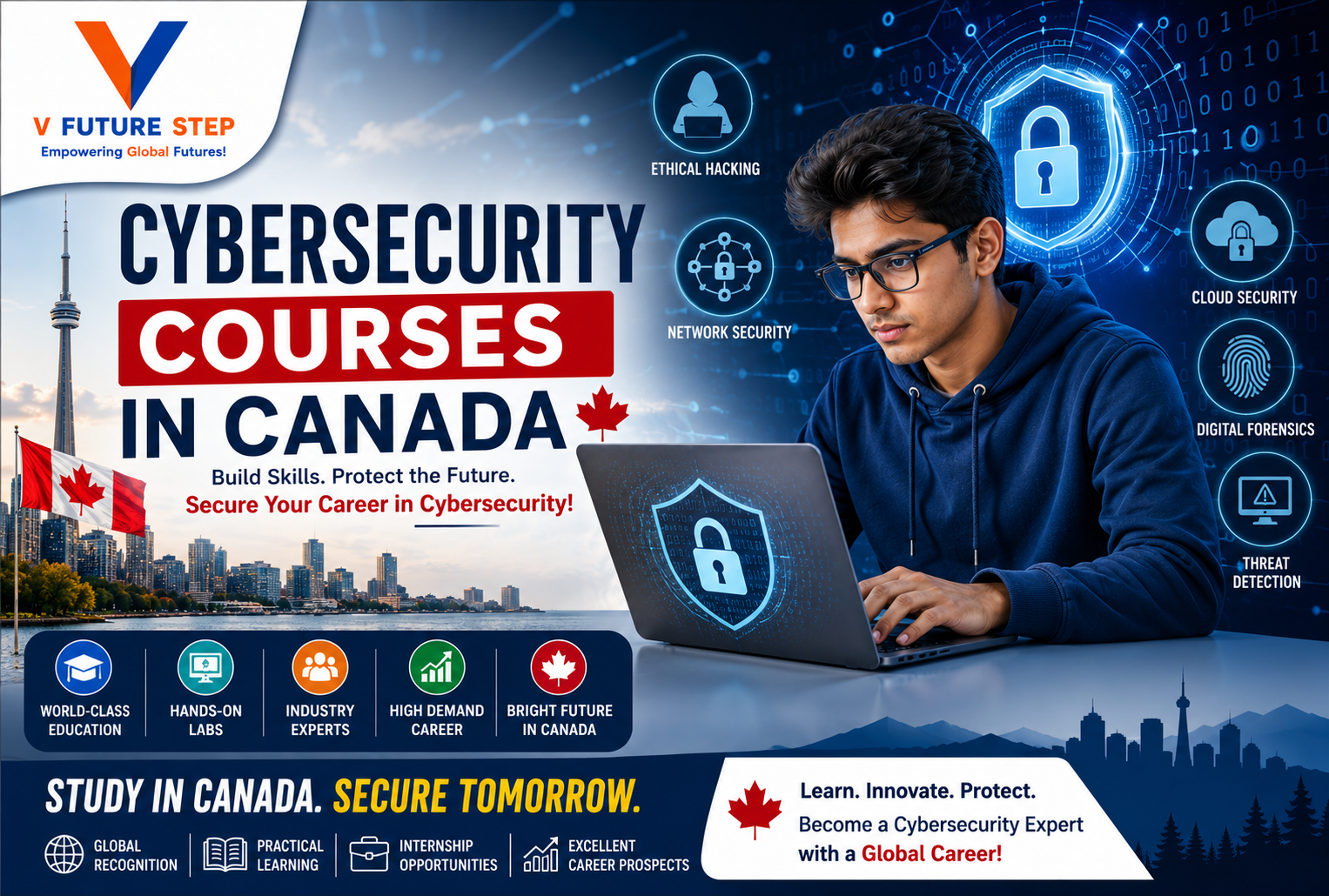
With businesses, governments, healthcare organizations, banks, and educational institutions becoming increasingly digital, cybersecurity has become one of the fastest-growing career fields worldwide. As cyber threats continue to evolve, organizations are investing heavily in protecting sensitive data, digital infrastructure, and online systems. This growing demand has created excellent career opportunities for skilled cybersecurity professionals.
For international students, choosing Cybersecurity Courses in Canada is an excellent way to build a future-ready career. Canada is known for its world-class education system, advanced technology sector, industry-focused learning, and strong employment opportunities. Every year, thousands of students decide to study in Canada because of its globally recognized qualifications, practical education, and career-oriented programs.
Cybersecurity is no longer limited to large technology companies. Today, professionals are needed across industries including healthcare, banking, government, retail, manufacturing, telecommunications, transportation, and cloud computing. As digital transformation accelerates, cybersecurity experts are becoming essential in almost every sector.
This comprehensive guide explores everything students need to know about Cybersecurity Courses in Canada, including course types, eligibility, skills gained, career opportunities, admission requirements, and why Canada remains one of the best destinations for aspiring cybersecurity professionals.
Why Choose Cybersecurity as a Career?
Cybersecurity has become one of the most secure and rewarding career options in today’s digital economy. Every organization that uses computers, cloud services, or online platforms requires professionals who can protect valuable information from cyber attacks.
Unlike many traditional careers, cybersecurity offers continuous learning, technological innovation, and opportunities to solve real-world problems. Professionals work with advanced technologies while helping organizations defend against evolving cyber threats.
Benefits of Choosing Cybersecurity
A career in cybersecurity offers:
- High industry demand
- Excellent career growth
- Competitive salaries
- Global employment opportunities
- Diverse job roles
- Continuous learning
- Advanced technologies
- Long-term job stability
These advantages make Cybersecurity Courses in Canada an attractive choice for students seeking a future-proof profession.
Why Study Cybersecurity in Canada?
Canada has emerged as one of the leading destinations for cybersecurity education because of its strong technology ecosystem, innovation-driven economy, and practical learning approach.
Students who study in Canada benefit from internationally recognized qualifications, experienced faculty, modern laboratories, and industry partnerships that prepare graduates for professional careers.
Universities and colleges emphasize hands-on learning through projects, simulations, and practical assignments that mirror real-world cybersecurity challenges.
Advantages of Studying Cybersecurity in Canada
Students benefit from:
- Globally recognized education
- Industry-focused curriculum
- Practical learning experience
- Modern cybersecurity laboratories
- Experienced faculty
- Research opportunities
- Diverse student community
- Strong employment prospects
Choosing to study in Canada allows students to develop technical expertise while gaining valuable international exposure.
Growing Demand for Cybersecurity Professionals
Digital transformation has increased the need for cybersecurity experts across nearly every industry.
Organizations require professionals who can identify security risks, prevent cyber attacks, monitor networks, investigate incidents, and protect sensitive information.
This demand continues to grow as businesses adopt cloud computing, artificial intelligence, online banking, remote work, and digital services.
Industries Hiring Cybersecurity Professionals
Graduates may find opportunities in:
- Banking
- Financial Services
- Healthcare
- Government
- Information Technology
- Telecommunications
- Manufacturing
- Retail
- Education
- Energy
- Insurance
- Consulting
Because of this expanding demand, Cybersecurity Courses in Canada remain among the most valuable technology programs available today.
Types of Cybersecurity Courses in Canada
Canadian institutions offer cybersecurity programs at multiple academic levels, allowing students to choose an option based on their educational background and career goals.
Diploma Programs
Diploma programs focus on practical skills and technical knowledge.
Students typically learn:
- Network Security
- Ethical Hacking
- Operating Systems
- Cyber Defense
- Security Tools
- Incident Response
Diplomas are ideal for students seeking quicker entry into the workforce.
Bachelor’s Degree
Bachelor’s programs provide comprehensive theoretical and practical education.
Students study subjects including:
- Computer Networks
- Programming
- Digital Security
- Cyber Risk Management
- Database Security
- Cloud Security
- Artificial Intelligence
- Information Systems
Graduates develop strong technical and analytical skills suitable for professional cybersecurity careers.
Master’s Degree
Master’s programs focus on advanced cybersecurity concepts, research, leadership, and specialized technologies.
Students may specialize in:
- Cloud Security
- Cyber Intelligence
- Digital Forensics
- Information Assurance
- Security Architecture
- Artificial Intelligence Security
These programs prepare graduates for senior technical and management positions.
Graduate Certificate Programs
Graduate certificates provide specialized training for students who already hold a bachelor’s degree.
These programs help professionals enhance technical skills and improve career opportunities.
Subjects Covered in Cybersecurity Courses
Although course structures vary among institutions, most cybersecurity programs cover both technical and management topics.
Common Subjects
Students commonly study:
- Network Security
- Ethical Hacking
- Cryptography
- Cloud Security
- Cyber Law
- Digital Forensics
- Risk Management
- Security Operations
- Malware Analysis
- Incident Response
- Programming Fundamentals
- Information Security
These subjects prepare graduates to solve real-world cybersecurity challenges.
Practical Learning Experience
One of the biggest advantages of Canadian education is its emphasis on practical learning.
Instead of relying solely on classroom lectures, students participate in hands-on activities that strengthen their technical abilities.
Practical Training Includes
Students may gain experience through:
- Cybersecurity laboratories
- Network simulations
- Security testing
- Case studies
- Research projects
- Team assignments
- Security assessments
- Industry workshops
This practical exposure increases confidence before entering the workforce.
Skills Students Develop
Technical knowledge alone is not enough for success in cybersecurity.
Students also develop problem-solving, communication, and analytical skills that employers highly value.
Technical Skills
Students learn:
- Network monitoring
- Threat detection
- Ethical hacking
- Cloud security
- Firewall management
- Security auditing
- Vulnerability assessment
- Incident investigation
Professional Skills
Students also improve:
- Communication
- Critical thinking
- Leadership
- Teamwork
- Decision-making
- Time management
- Research ability
- Adaptability
These skills prepare graduates for both technical and leadership roles.
Eligibility Requirements
Admission requirements vary depending on the institution and program level.
Students planning to study in Canada should carefully review the eligibility criteria before submitting applications.
General Eligibility
Applicants generally need:
- Required academic qualifications
- Academic transcripts
- Valid passport
- Proof of language proficiency (if required)
- Statement of Purpose
- Resume (for selected programs)
- Letters of Recommendation (for postgraduate programs)
Preparing documents early helps simplify the admission process.
Admission Process
The admission process for cybersecurity programs is generally straightforward when students prepare in advance.
Typical Admission Steps
Students usually:
- Research suitable programs.
- Check eligibility requirements.
- Prepare academic documents.
- Submit applications.
- Receive admission decisions.
- Complete remaining formalities.
- Plan finances.
- Prepare to study in Canada.
Early preparation increases the chances of securing admission to preferred institutions.
Course Duration
The duration depends on the qualification level and chosen institution.
Typical Program Length
- Diploma: Approximately 1–2 years
- Bachelor’s Degree: Approximately 3–4 years
- Master’s Degree: Approximately 1–2 years
- Graduate Certificate: Approximately 8 months–2 years
Students should choose the program that aligns with their educational background and long-term career objectives.
Career Scope After Completing Cybersecurity Courses
The career outlook for cybersecurity professionals continues to improve every year.
Graduates who complete Cybersecurity Courses in Canada can pursue opportunities across both public and private sectors.
Organizations increasingly seek professionals who can secure digital infrastructure, manage cyber risks, and respond effectively to security incidents.
Popular Career Paths
Graduates may pursue roles such as:
- Cybersecurity Analyst
- Security Consultant
- Network Security Engineer
- Information Security Analyst
- Ethical Hacker
- Penetration Tester
- Cloud Security Specialist
- Security Operations Analyst
- Digital Forensics Specialist
- Risk Analyst
The combination of quality education and practical experience makes study in Canada an excellent pathway for students aiming to build successful careers in cybersecurity.
Salary Expectations After Completing Cybersecurity Courses
Cybersecurity professionals are among the highest-paid technology specialists because organizations place great importance on protecting digital systems and sensitive information. Salary levels generally depend on education, technical skills, certifications, industry, experience, and job responsibilities.
Students who complete Cybersecurity Courses in Canada and continuously upgrade their skills often enjoy excellent long-term earning potential.
Factors That Influence Salary
Several factors affect compensation, including:
- Education level
- Technical expertise
- Professional certifications
- Industry sector
- Years of experience
- Job role
- Company size
- Location
Graduates who continue learning emerging technologies often progress into senior positions with greater responsibilities.
Future of Cybersecurity Careers
Cybersecurity is expected to remain one of the fastest-growing technology sectors for many years. As businesses expand their digital operations, the demand for qualified professionals continues to increase.
Organizations are investing heavily in securing cloud platforms, artificial intelligence systems, financial transactions, healthcare records, and critical infrastructure. These developments ensure long-term career opportunities for graduates.
Students who study in Canada can benefit from this growing demand by developing technical expertise that matches industry needs.
Emerging Career Areas
Future opportunities include:
- Artificial Intelligence Security
- Cloud Security
- Cyber Threat Intelligence
- Digital Risk Management
- Security Automation
- Internet of Things (IoT) Security
- Blockchain Security
- Security Architecture
- Incident Response
- Identity and Access Management
These specializations continue to shape the future of cybersecurity worldwide.
Professional Certifications That Add Value
Although academic qualifications provide a strong foundation, professional certifications can further strengthen your resume and demonstrate specialized knowledge.
Many employers value candidates who combine formal education with industry-recognized certifications.
Popular Certification Areas
Students may consider certifications in:
- Ethical Hacking
- Cloud Security
- Security Operations
- Risk Management
- Information Security
- Network Security
- Digital Forensics
- Security Auditing
These certifications complement Cybersecurity Courses in Canada and improve career prospects.
How to Choose the Right Cybersecurity Course
Selecting the right program is an important step toward building a successful career. Rather than choosing a course based only on popularity, students should compare programs carefully.
A course that matches your career goals, educational background, and interests will provide better long-term value.
Factors to Compare
Before applying, consider:
- Curriculum quality
- Practical learning opportunities
- Faculty expertise
- Industry partnerships
- Laboratory facilities
- Internship opportunities
- Course duration
- Tuition fees
- Student support services
- Graduate outcomes
Making an informed decision helps students maximize the benefits of their education.
Tips for International Students
Planning ahead can make your academic journey smoother and more rewarding.
Students preparing to study in Canada should focus on both academic and personal development before arriving.
Helpful Preparation Tips
Students should:
- Improve communication skills.
- Strengthen computer networking fundamentals.
- Learn basic programming concepts.
- Stay updated on cybersecurity trends.
- Practice problem-solving.
- Develop time management skills.
- Build a professional resume.
- Participate in technical projects.
These preparations help students adapt more confidently to university life.
Why Cybersecurity Is a Future-Proof Career
Technology continues to transform every industry, making cybersecurity an essential function rather than an optional service.
Every organization that stores customer information, financial records, healthcare data, or business systems requires professionals who can identify risks and protect digital assets.
Because cyber threats constantly evolve, organizations need skilled professionals who continue learning throughout their careers.
Reasons Cybersecurity Remains Future-Proof
Cybersecurity offers:
- Consistent industry demand
- Continuous technological innovation
- Diverse career opportunities
- Global employment prospects
- Long-term career stability
- Opportunities for specialization
- Professional growth
- Leadership potential
Choosing Cybersecurity Courses in Canada is an excellent investment for students seeking a stable and rewarding profession.
Industries Employing Cybersecurity Graduates
Cybersecurity professionals work in nearly every sector of the economy.
Common Employers
Graduates may find opportunities in:
- Banks
- Technology companies
- Government agencies
- Healthcare organizations
- Insurance companies
- Educational institutions
- Manufacturing companies
- Telecommunications firms
- Retail businesses
- Consulting organizations
This diversity allows graduates to explore multiple career paths based on their interests.
Building a Successful Cybersecurity Career
Success in cybersecurity requires more than technical knowledge. Employers value professionals who demonstrate curiosity, adaptability, and a commitment to continuous learning.
Students should actively seek opportunities to improve their practical skills through projects, competitions, internships, and independent learning.
Networking with professionals and participating in cybersecurity communities can also open doors to future career opportunities.
Final Thoughts
Cybersecurity has become one of the most promising technology careers in today’s digital world. Organizations across industries continue to invest in protecting their systems, making skilled professionals increasingly valuable.
Choosing Cybersecurity Courses in Canada gives students access to quality education, practical learning, experienced faculty, and strong career opportunities. Whether your goal is to become a security analyst, ethical hacker, cloud security specialist, digital forensics expert, or cybersecurity consultant, Canada provides an excellent environment to develop the knowledge and skills needed for long-term success.
If you plan to study in Canada, selecting a cybersecurity program can be a smart investment in your future. By combining academic excellence with practical experience, continuous learning, and professional certifications, you can build a rewarding international career in one of the world’s fastest-growing industries.
Frequently Asked Questions
What are Cybersecurity Courses in Canada?
These programs teach students how to protect computer systems, networks, applications, and digital information from cyber threats while developing practical technical skills for the workplace.
Who can apply for cybersecurity courses?
Eligibility depends on the institution and program level. Students generally need the required academic qualifications, supporting documents, and other admission requirements specified by the institution.
What skills do cybersecurity students learn?
Students develop skills in network security, ethical hacking, cloud security, digital forensics, threat detection, incident response, risk management, communication, and problem-solving.
Is cybersecurity a good career choice?
Yes. Cybersecurity offers excellent career growth, strong industry demand, global employment opportunities, and long-term professional stability.
Which industries hire cybersecurity graduates?
Graduates can work in banking, healthcare, government, information technology, education, manufacturing, telecommunications, retail, consulting, insurance, and many other sectors.
Why Choose V Future Step?
At V Future Step, we help students explore, compare, and choose the right study abroad options based on their academic goals, career aspirations, and budget. Our personalized guidance ensures you make informed decisions for your future.
We also connect students with the right-fit agencies and provide complete support with university selection, applications, documentation, education planning, and visa guidance. Whether your goal is to study in Canada or pursue another international destination, V Future Step is here to support your journey every step of the way.